What's Actually in Ringana Products? Reading the Ingredient Lists
I'm an independent Ringana Partner. Maemuki Mom is my own site, not Ringana's, and nothing here is written or approved by the company. If you order through me, I earn a commission.
I spend a lot of this site telling people to turn the bottle over and read the back. It would be odd not to do that, in public, with the products I use and sell.
So this is that. I've read three Ringana ingredient lists using exactly the method in how to read an ingredient list, and I'll tell you what I see, including the parts that don't flatter anyone.
Two ground rules. First, I'm describing what each ingredient is and why it's in a formula, not promising what it will do to your skin. Nobody can honestly promise that from a label. Second, the lists here come from independent ingredient databases rather than from Ringana, because the company's own product pages don't load in a way I can link to. Formulas change, so treat this as a guide to reading the label, and check the one on your own bottle.
The cleanser
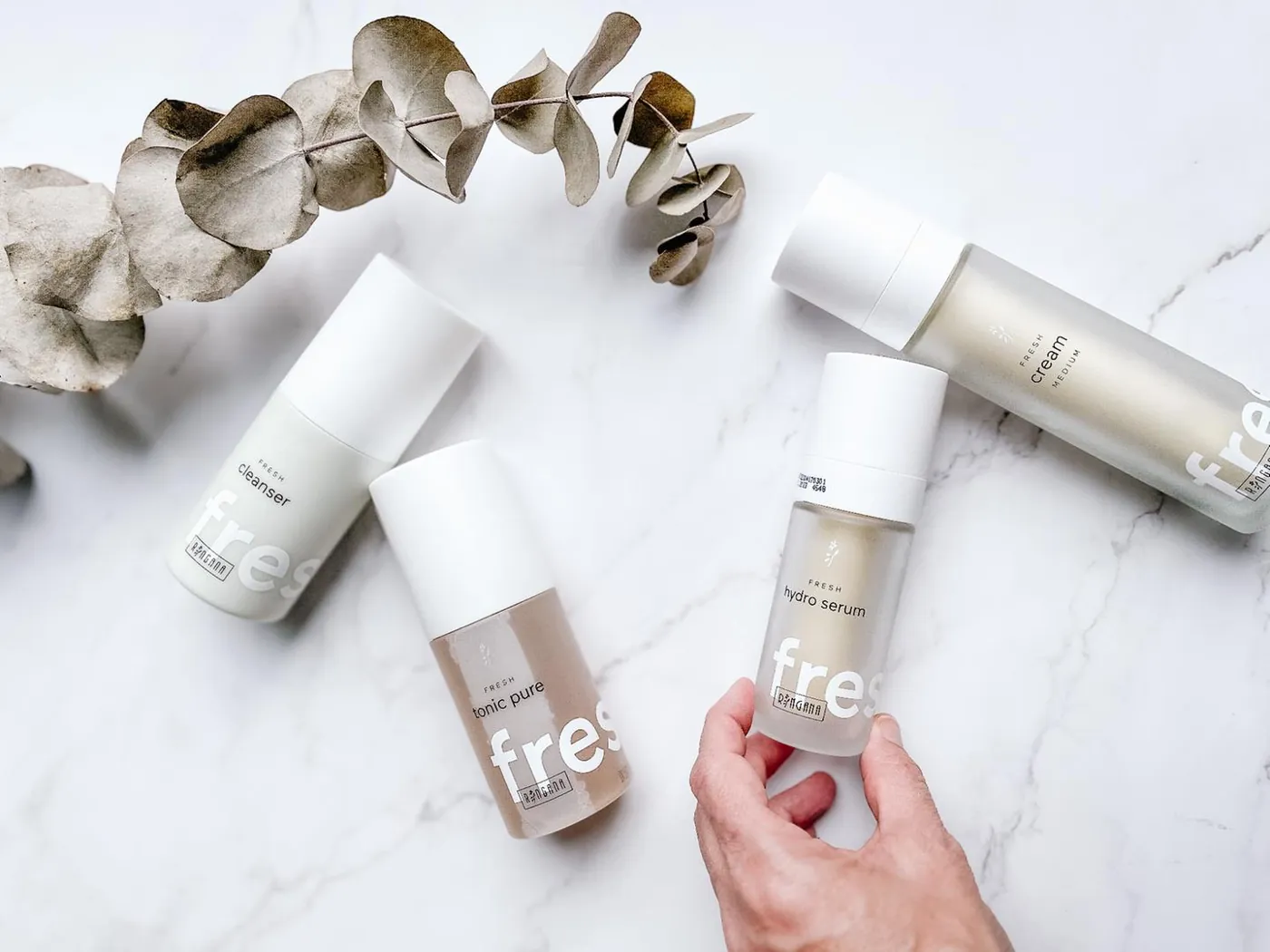
This is the FRESH Cleanser list as published by Skinsort, last updated in 2023, in label order:
Citrus Sinensis Fruit Water, Sesamum Indicum Seed Oil, Squalane, Pentylene Glycol, Cetearyl Wheat Straw Glycosides, Cetearyl Alcohol, Prunus Amygdalus Dulcis Oil, Vitis Vinifera Seed Oil, Glyceryl Stearate Citrate, Salvia Hispanica Seed Extract, Camellia Sinensis Seed Extract, Melilotus Officinalis Extract, Calendula Officinalis Flower Extract, Ginkgo Biloba Leaf Extract, Simmondsia Chinensis Seed Extract, Rosmarinus Officinalis Leaf Extract, Rosa Damascena Flower Oil, Phenethyl Alcohol, Tocopherol, Xanthan Gum, Arginine, Water, Alcohol, Citric Acid, CI 75810
What's at the top. The first ingredient isn't water. It's Citrus Sinensis Fruit Water, which is water obtained from oranges. It does the same job plain water does in most products, as the base everything else is dissolved in. Plain water does appear, but near the end, which tells you it's a minor component. After that come sesame oil, squalane and a glycol. That's a cleansing milk built on oils, which is what the product is.
Where the one percent line sits. There's no phenoxyethanol to use as a marker, because there are no listed preservatives at all. Instead, look for things almost always used in tiny amounts: xanthan gum, citric acid and the color CI 75810, a green pigment derived from chlorophyll, near the end are all typical low-percentage ingredients. Roughly from rosemary extract downwards, you're likely below one percent, where the order is the brand's choice rather than a measurement. So the long run of plant extracts in the middle (chia, green tea seed, sweet clover, calendula, ginkgo, jojoba) are present, but you shouldn't read their position as large quantities.
What's doing the preserving. Nothing from the EU's approved preservative list. Instead you can see several ingredients that make the product less hospitable to microbes as a side effect of their main job: pentylene glycol, alcohol, citric acid, rosemary extract and phenethyl alcohol. That's the "several low fences" approach I describe in what preservative-free actually means, visible on a real label.
Where the fragrance is. There's no "parfum" listed. But there is Rosa Damascena Flower Oil, rose oil, and phenethyl alcohol, which has a rose-like scent. Rose oil naturally contains citronellol and geraniol, both on the EU's list of declarable fragrance allergens. So this cleanser is scented with plant oils rather than a fragrance blend. That's a choice I like, and it is still fragrance as far as sensitive skin is concerned.
Worth knowing. Sweet almond oil (Prunus Amygdalus Dulcis) is in there, which matters if you have a nut allergy.
The serum
The FRESH Hydro Serum list, also from Skinsort and updated in 2023, is longer at 37 ingredients. The first few:
Citrus Aurantium Dulcis Fruit Water, Water, Isoamyl Laurate, Pentylene Glycol, Sodium Lactate, Isosorbide Dicaprylate, Opuntia Ficus-Indica Seed Oil, Betaine, Glycerin, Actinidia Chinensis Fruit Water...
What's at the top. Orange fruit water and plain water again, then a light plant-derived emollient (isoamyl laurate), the same multifunctional glycol, and then a group of humectants, ingredients that hold onto water: sodium lactate, betaine and glycerin. Prickly pear seed oil and kiwi fruit water follow. For a product called a hydro serum, the top of the list is consistent with the name, which is more than you can say for many labels.
The ingredients the marketing tends to mention, such as sodium hyaluronate (a form of hyaluronic acid), ubiquinone (coenzyme Q10) and the ferment ingredients, sit in the middle and lower part of the list. That's normal. Ingredients like these are often effective at low percentages, and the position on its own doesn't tell you the amount is wrong. It does tell you not to picture a bottle full of them.
Preserving and fragrance. The same pattern as the cleanser: no listed preservative, with pentylene glycol, lactic acid, citric acid and phenethyl alcohol doing supporting work, and rose oil providing the scent.
The cream
For FRESH Cream Light, the database lists all 46 ingredients but says the order isn't the label order, so I won't pretend to read the one percent line from it. What I can say from the list itself:
- Ceramides NP and AP and phytosterols are there. These are lipids of the kind naturally found in skin, common in moisturizers.
- The preserving support is more visible here than in the other two: caprylyl glycol, glyceryl caprylate, pentylene glycol, sodium citrate and alcohol. That makes sense. A water-rich cream is a more hospitable home for microbes than an oil-based cleanser, so it needs more fences.
- No ingredient is classed as fragrance, according to the database.
What I take from this, honestly
The labels match the story the company tells about itself, which is genuinely the first thing I check with any brand. Short shelf lives, no listed preservatives, scent from plant oils rather than a fragrance blend, and formulas built on fruit waters and plant oils. I like reading a list and finding it agrees with the front of the box.
Three things I'd say just as plainly, though.
"No preservatives" doesn't mean nothing is preserving them. It means none from the approved list. That's a real and legitimate approach, and it's also exactly what the EU's claims guidance warns about when the wording is careless. I'd rather you understood how it works than took the slogan at face value.
Scented with plant oils still means scented. If you react to fragrance, rose oil and its allergens matter as much as a synthetic blend would.
A label can't tell you how a product suits your skin. It tells you order and identity, not concentration, quality or how you'll get on with it. Which is a big part of why I'd rather talk to you about where to start than have you choose from a list.
If you want to know which of these I'd start with, I've written about where I'd begin.
Sources
- Skinsort, Ringana FRESH Cleanser: ingredient list, updated August 2023
- Skinsort, Ringana FRESH Hydro Serum: ingredient list, updated August 2023
- Skinsort, Ringana FRESH Cream Light: ingredient list, updated April 2026, not in label order
- ECHA, Cosmetic Products Regulation Annex V: the EU list of permitted preservatives
- EcoMundo, EU fragrance allergen labelling: citronellol and geraniol among the declarable allergens
Have a question?
Tell me a bit about yourself and I'll get back to you personally, usually within a day. A real reply, from me.